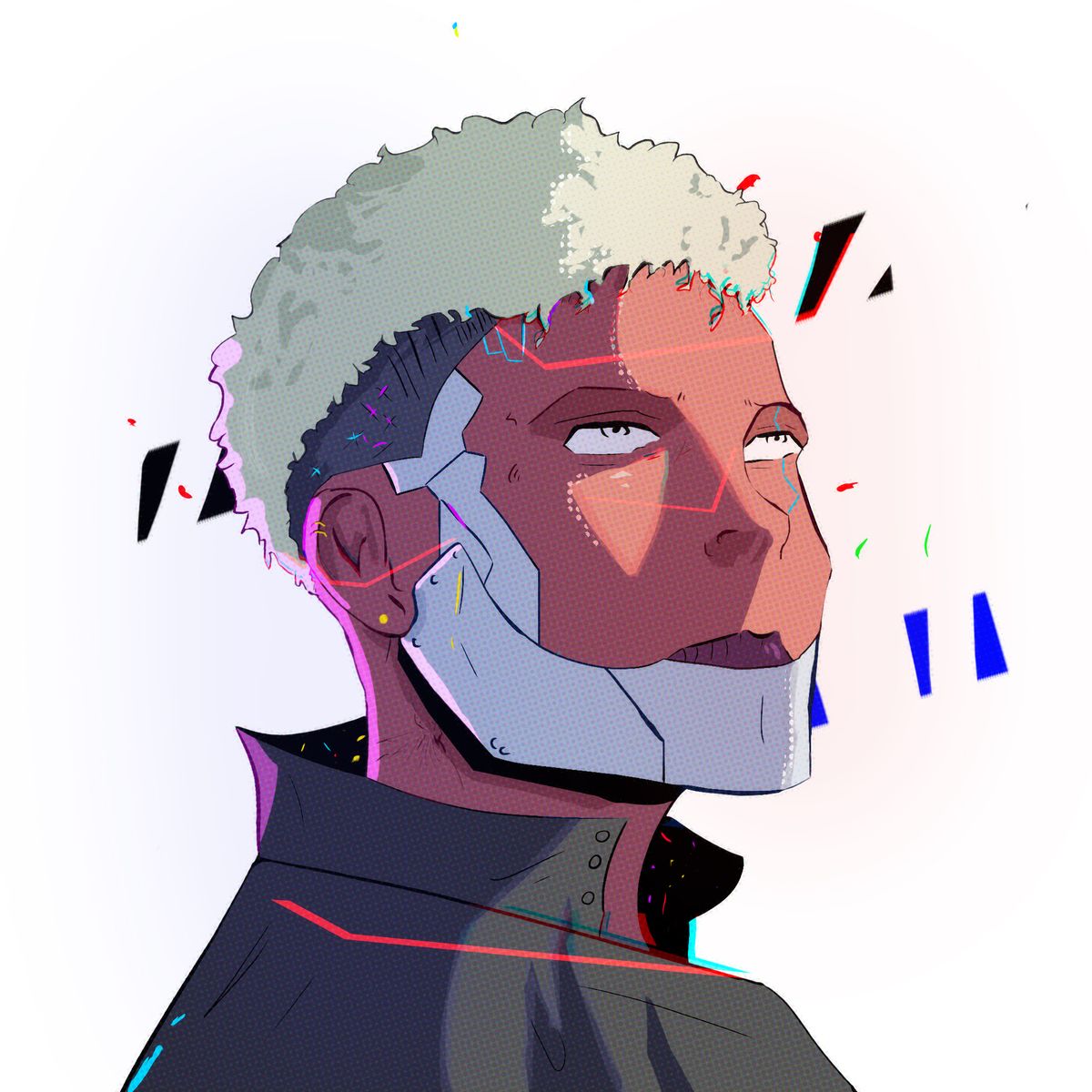

“In the beginning were the Words, and the Words made the world. I am the Words. Where the Words end the world ends.” I can’t seem to stop quoting games.
This one is from The Talos Principle, a beautifully intricate game, filled with both simple joy and complex philosophical concepts. It reflects mankind’s eternal struggle to keep moving forward. It reminds me of another story I once read or saw somewhere. In this story, the main character is headed toward inevitable death because of a spaceship's course towards the sun. And yet, despite this fate, the character carefully tends to their plants each day, while reminiscing about their life.
Somehow, these concepts feel truly human—they capture the touching essence of facing inevitable doom and yet still moving forward. It’s a theme that resonates deeply, though I’d love to write about the indomitable human spirit, that’s not what this letter is about. It’s about the words. In fact, in The Talos Principle, the quote above only plays when you are about to exit the bounds of the game. This moment holds a dual meaning: Remove the words and the boundaries of our world drastically decrease. Certain emotions that are felt, that are real, might be glossed over due to the lack of vocabulary to describe them.
For example, take the Korean word 한 (han), a complex word rooted in the history and struggles of the Korean people. It’s been described in many different ways, but remains elusive and multifaceted. Minjung theologian Suh Nam-Dong defines it as:
“a feeling of unresolved resentment against injustices suffered, a sense of helplessness because of the overwhelming odds against one, a feeling of acute pain in one’s guts and bowels, making the whole body writhe and squirm, and an obstinate urge to take revenge and to right the wrong—all these combined.”
Memory as a Facilitator
This brings me to memory. While playing The Talos Principle and learning Korean recently, I’ve felt an awe at words and the role memory plays in helping us learn and retain them. Memory is such a fundamental human quality, yet most of us take it for granted. It’s something we rely on constantly, yet in today’s world, due to our phones, the usage of this skill has diminished. Rather than memorizing, we now write down shopping lists, ask Google or Siri to remind us of things, and rely on notifications for everything. But, like all muscles, memory weakens with lack of use.
Why am I talking about memory in a newsletter about words? Because they are deeply interconnected—two halves of the greater whole that is human communication. As I’ve been reading The Courage to Be Disliked by Ichiro Kishimi and Fumitake Koga, the argument is made that “All problems are interpersonal relationship problems,” a statement I wholeheartedly agree with. Although I have not finished the book, it also touches upon the role of courage in overcoming these issues. Often, I believe that the courage we need most is the courage to communicate—to truly express ourselves through words.
Gaining a New Soul
Learning a language feels like gaining a new soul. So much of how we think is tied to the words we use. When you begin learning a new language, especially one where none of the words have any connections yet, it’s a transformative experience—like being reborn. Words carry values, emotions, and thoughts, and they have the power to expose what we really think. A Freudian slip, if you will. 🤣
Someone who uses predominantly pessimistic words, words of defeat, will naturally have a more pessimistic view of life. The language we use shapes our perceptions—life can warp itself around the words you choose. Certain commonplace phrases can even lock us into a particular mindset. Take, for instance, the phrase “I am tired.” We hear it all the time, and many of us say it often. If you start counting, it seems like everyone is tired all the time. Why is that? I believe it’s because, over time, phrases like these begin to shape our identity. We use them to seek sympathy, to connect with others, and in doing so, they become part of who we are.
But what happens when you learn a new language? Honestly, I’m not entirely sure yet—I’m still early in my own journey of learning Korean. But what I’ve begun to realize is that the words we use in a language are deeply rooted in the culture of the place where it’s spoken. Take the aforementioned Korean word “han”—a word that embodies the country’s historical struggles with occupation and resilience. Learning these words seems to carry a piece of that culture with them. That’s why many language learners feel like they gain a different personality when speaking another language, especially when that language is far removed from their mother tongue. It’s as though learning a new language is like gaining a new soul.
The words are the creation and expansion of our mental boundaries. A practice in travelling into the unkown, braving the uncertainities of life and the inveitability of it all. Where the words end, the world ends—but as long as we have memory and language, that boundary is ever-expanding.
Ps: This weeks letter is a bit short but I hope it is satisfactory… 🤖 Again, things are still a wee bit complicated in my life right now, so things are taking time. I will make sure to make the weekly newsletters but work on the comic has halted as I feverishly try to figure out some details! Next weeks letter will be about a topic dear to my heart, look forward to it! 🗿